
The governor of New York has signed a pair of companion bills into law that build on the state’s marijuana farmers market program, allowing expanded partnerships between licensed cannabis businesses and standalone “pop-up” events.
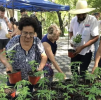
Governor Kathy Hochul signed legislation last week that permanently establishes cannabis farmers markets across New York State, a move that could significantly reshape the state's cannabis retail landscape during a period of ongoing regulatory challenges.
The Office of Cannabis Management (OCM) first authorized these markets as a temporary measure in July 2023 to provide relief to licensed growers facing a bottleneck in the retail dispensary rollout. What started as a stopgap solution has now become an official alternative retail channel.
The legislation comes at a time when New York's cannabis industry continues to face significant challenges. The state has struggled to open sufficient licensed dispensaries to absorb the production from its licensed cultivators, creating financial pressure for growers who have harvested crops with limited places to sell them.
The farmers market model represents an alternative approach that has proven successful in other industries. Similar to agricultural farmers markets that allow food producers to sell directly to consumers, these cannabis markets create direct producer-to-consumer relationships that bypass traditional retail constraints.
While the permanent establishment of cannabis farmers markets won't solve all the challenges facing New York's cannabis industry, it represents a significant policy adaptation that acknowledges the realities of the current market.
The OCM will now develop specific regulations to implement the new law, determining exactly how these markets will operate across the state. Industry observers will be watching closely to see whether this alternative retail channel can help stabilize New York's cannabis market as it continues to mature.
As New York continues to refine its approach to cannabis regulation, this farmers market model could potentially influence policy in other states facing similar challenges in balancing production with retail availability.
Source
Governor Kathy Hochul signed legislation last week that permanently establishes cannabis farmers markets across New York State, a move that could significantly reshape the state's cannabis retail landscape during a period of ongoing regulatory challenges.
A Permanent Solution Emerges
The newly signed bill (S.7956/A.8762) transforms what began as a temporary program in 2023 into a permanent fixture of New York's cannabis ecosystem. The legislation allows licensed cultivators and processors to sell their products directly to consumers at approved market locations throughout the state, creating a farm-to-consumer pipeline previously unavailable in the traditional retail structure.The Office of Cannabis Management (OCM) first authorized these markets as a temporary measure in July 2023 to provide relief to licensed growers facing a bottleneck in the retail dispensary rollout. What started as a stopgap solution has now become an official alternative retail channel.
Market Impact and Industry Response
The expansion of cannabis farmers markets addresses several critical issues facing New York's cannabis rollout. According to industry sources, these markets have already proven beneficial in multiple ways:- They provide crucial revenue streams for licensed cultivators who have invested in production but faced limited retail outlets
- They offer consumers direct access to locally-grown cannabis products
- They create educational opportunities as consumers can learn directly about cultivation practices and product varieties
- They potentially reduce prices by eliminating middlemen in the supply chain
The legislation comes at a time when New York's cannabis industry continues to face significant challenges. The state has struggled to open sufficient licensed dispensaries to absorb the production from its licensed cultivators, creating financial pressure for growers who have harvested crops with limited places to sell them.
Regulatory Framework
The bill authorizes the OCM to establish comprehensive regulations governing these markets, including:- Location and security requirements
- Age verification protocols to prevent sales to minors
- Quality assurance standards
- Tracking and reporting mechanisms
Economic Context
New York legalized adult-use cannabis in March 2021, but the retail rollout has been slower than anticipated. Legal challenges and regulatory hurdles have limited the number of operational dispensaries, creating a disconnect between production and retail capacity.The farmers market model represents an alternative approach that has proven successful in other industries. Similar to agricultural farmers markets that allow food producers to sell directly to consumers, these cannabis markets create direct producer-to-consumer relationships that bypass traditional retail constraints.
While the permanent establishment of cannabis farmers markets won't solve all the challenges facing New York's cannabis industry, it represents a significant policy adaptation that acknowledges the realities of the current market.
The OCM will now develop specific regulations to implement the new law, determining exactly how these markets will operate across the state. Industry observers will be watching closely to see whether this alternative retail channel can help stabilize New York's cannabis market as it continues to mature.
As New York continues to refine its approach to cannabis regulation, this farmers market model could potentially influence policy in other states facing similar challenges in balancing production with retail availability.
Source

